English
 Português
 Español

Umasbamba Andean Spirit on the Shores of the Sacred Lagoon
From
$270.00 pp


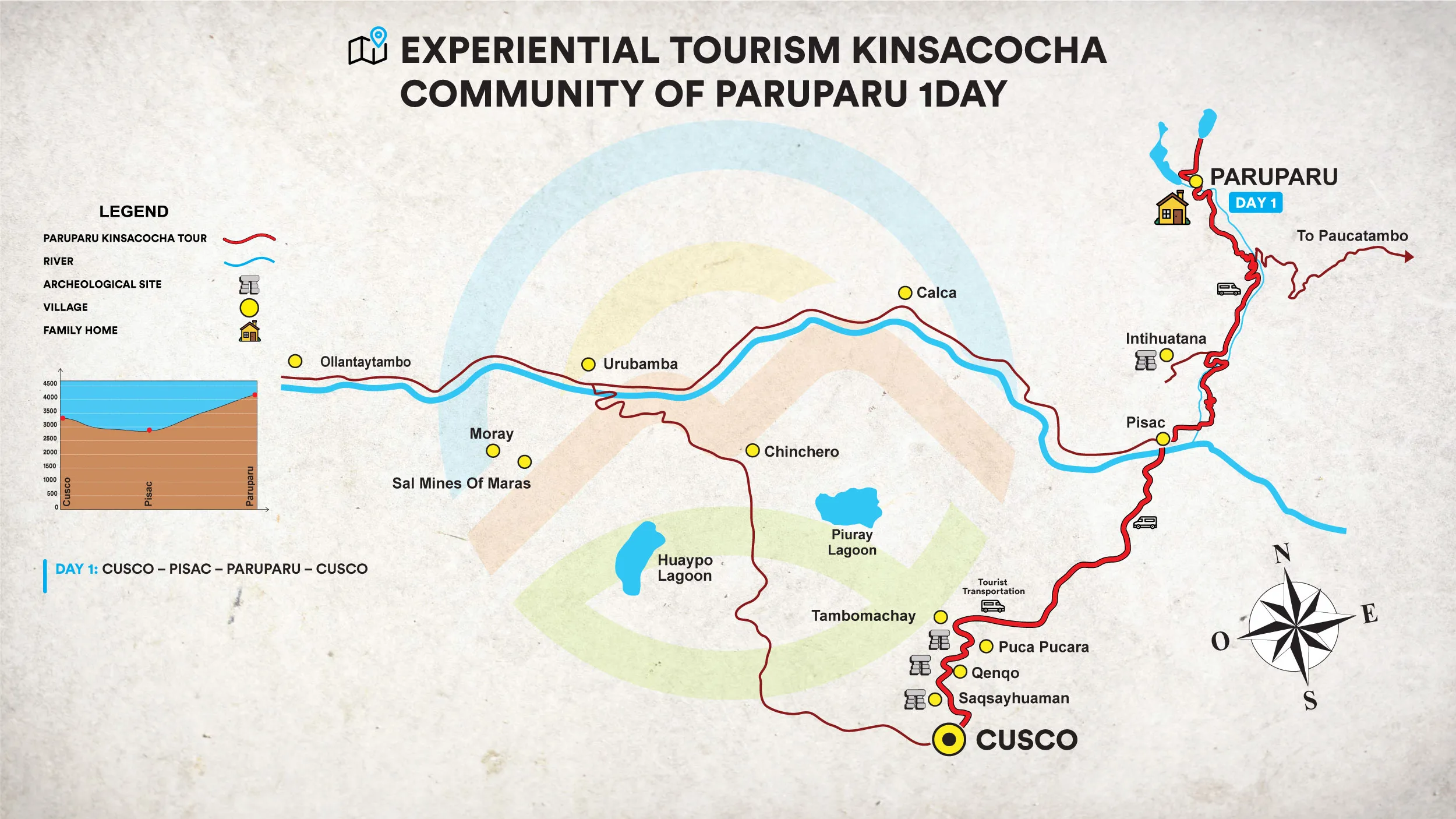
Paru Paru is a highland Andean community located in the district of Pisac, Calca province, in the Sacred Valley of the Incas, at 3,900 meters (12,795 ft) above sea level. Known for its incredible biodiversity of native potatoes, the community preserves over 1,000 unique varieties using ancestral farming techniques. The people of Paru Paru proudly uphold their cultural and spiritual traditions, offering visitors a deep and authentic immersion into the Andean worldview.
Surrounded by majestic mountains and crystal-clear lagoons, Paru Paru is also a natural sanctuary where the landscape holds deep spiritual meaning. This immersive experience invites you to connect with nature, learn about sustainable agriculture, and take part in local customs. It’s a place where Andean cultural and natural richness come together in perfect harmony.
Your journey begins at 7:30 a.m. with pickup from your hotel in Cusco. We head toward the Paru Paru community, where we receive a heartfelt welcome with traditional music, kantu flowers, and folkloric dances — a warm expression of the community’s cultural pride and hospitality.
We then visit the “Native Potato Sanctuary,” where local farmers teach us about the diverse varieties of Andean potatoes — their colors, shapes, flavors — and share the traditional processes of making chuño and moraya, ancient preservation techniques still practiced today. You’ll also learn about traditional Andean farming tools like the chaquitaclla, karwina, and lampa.
Next, we visit a potato field and take part in a small spiritual ceremony of gratitude to Pachamama known as “k’intuchi”, a moving moment that fosters a deep connection between visitors and the Earth. Afterwards, we enjoy a delicious traditional lunch prepared with organic ingredients and native potato varieties grown by the community.
In the afternoon, we participate in a weaving and natural dyeing workshop, where local women demonstrate how they extract colors from native plants and cochineal insects. You’ll see how Andean textile designs are created and even try your hand at weaving under the guidance of the expert artisans.
We end our day with a scenic hike to the Kinsacocha and Q’elwacocha lagoons, located above 4,100 meters (13,450 ft), surrounded by sacred mountains and breathtaking views that inspire reflection and awe.
Finally, the community bids us farewell with warmth and gratitude before we return to either Cusco or the Sacred Valley — based on your preference.
This cultural immersion in Paru Paru offers more than just learning and connection — it invites a profound reflection on respect for the land, the community, and our Andean roots.
Return to Cusco or the Sacred Valley as requested.
To showcase, preserve, and share ancestral knowledge, traditional techniques, and the cultural identity of the Paru Paru community — while also supporting sustainable local development. These hands-on experiences foster genuine cultural exchange and help bring value to the agricultural and artisan work of the local people, ensuring that these traditions are passed on to future generations.
This is one of the community’s most important activities. We’ll visit the Potato Museum and head to one of the native potato fields to learn about their variety, colors, properties, and agricultural tasks such as planting, harvesting, or irrigation — depending on the season — using traditional tools and ancestral techniques.
You’ll also discover other Andean tubers such as oca and mashwa, as well as traditional methods for producing freeze-dried potatoes (chuño and moraya).
It’s an educational experience that deepens your connection to the Earth.
In this hands-on workshop led by expert local artisans, visitors identify native dye plants used to color alpaca and sheep wool. The activity includes a demonstration of shearing and traditional dyeing techniques, showing how natural colors are extracted and combined — like the deep reds made from cochineal insects.
You’ll also see a display of traditional textiles featuring unique Andean iconography, and even learn how to weave with guidance from the community weavers, gaining insight into the techniques and symbolism of Andean textile art.
This nature walk takes you along scenic trails to Kinsacocha Lagoon, a stunning body of water surrounded by mountains. Along the way, your guide will explain the local flora and fauna and the cultural and spiritual significance of the lagoon for the community.
It’s the perfect opportunity to enjoy natural beauty while learning about the Andean landscape and its importance.
We highly recommend that you purchase and send us your travel insurance information prior to your arrival in Peru.
Private Tour Pricing
For more information about private tour pricing, contact us at [email protected] or via WhatsApp: +51 963 213 482.
During the tour, visitors can take part in activities such as identifying dye plants, observing traditional weaving techniques, and hiking to a nearby lagoon, among other cultural experiences.
The trip from Cusco to the Paru Paru community takes approximately 1 hour and 40 minutes by private transport.
No previous experience is required. Local expert weavers will guide visitors step-by-step through the weaving process.
We recommend wearing comfortable, warm, and waterproof clothing, as well as sturdy shoes suitable for walking on uneven terrain.
Yes, the visit to the nearby lagoon called Kinsaccocha is included as part of the tour itinerary.
A traditional lunch is provided, made with local ingredients that reflect the community’s cuisine.
Yes, visitors will have the opportunity to purchase handmade crafts and textiles created by community members.
Yes, the tour is suitable for all ages, though some walks may require a moderate level of physical effort.
This tour supports the local community by promoting their cultural traditions, generating income, and strengthening their cultural identity.
Native potato planting is done using traditional methods passed down through generations, respecting natural cycles and lunar phases.
Over 1,000 varieties of native potatoes are cultivated in Paru Paru, each with its own unique characteristics.
The community uses techniques such as “aporque” (mounding soil around the plants) to protect crops, crop rotation to maintain soil fertility, and underground storage to preserve potatoes.
Read our review about the Salkantay and Machu Picchu trekking 5 days and 4 nights.


We are Inca Perú Travel certified tour operator, we offer tours to different destinations in Peru, as well as cultural experiences, adventure tours, gastronomic tourism and our most recent experiential and community tourism tours.